
-
Episode 71: What Nobody Told Me About Money
Joe Saul-Sehy is the co-host of Stacking Benjamins, one of the most downloaded personal finance podcasts in the world — but long before he was giving financial advice to millions of listeners, he was making every money mistake in the book.
In this first of a two-part conversation with Chris Hill, Joe traces the roots of his complicated relationship with money, from a childhood defined by financial silence to the early adult mistakes that shaped everything that came after.
- What a Huffy bike taught him about emergency funds (before he knew what an emergency fund was)The moment a letter from American Express changed everything
Why the most important money lesson he ever received had nothing to do with money
The decision that turned a successful financial advisor into a podcaster — and what it cost him to get there
-
Episode 70: The Financial Journalist Who Ignored the Markets
John Wordock spent decades working for the biggest names in financial journalism — Bloomberg, CBS MarketWatch, The Wall Street Journal, Dow Jones. He interviewed Jack Bogle, and Mike Bloomberg personally sent him to Washington DC to build a broadcast bureau.
John knew everyone worth knowing in the world of money. And then he put his savings in index funds and stopped thinking about it. Chris Hill sits down with John to find out what three decades inside financial news actually taught him about his own relationship with money, as well as:
How his money story began in blue-collar Maine
Why knowing all the right people made him less likely to tinker with his portfolio
How he and his wife, both journalists, built a financially independent life and sent three kids to college without student loan debt
The one purchase he still regrets (due to terrible Bluetooth)
-

Episode 69: Make Peace with Money
Hannah Cole grew up watching her father, a successful architect, call family meetings at the dinner table whenever the economy turned. Belt-tightening conversations. No explanation of how bad things actually were. Just anxiety, and a dad in a bad mood.
Cole spent her early career as far from the world of money as she could get — a master's degree in painting from Boston University and years as a working artist in New York City. Then reality intervened. And when she finally sat down with an accountant for the first time, he opened the meeting by asking, "So when are you gonna get a real job?"
That question changed everything.
Today she's a tax expert, the founder of Sunlight Tax, financial education firm built specifically for creative people, and the author of Taxes For Humans. She talks with Chris Hill about:Why the feast-or-famine reality of artist life turns out to be one of the best teachers of financial discipline
The two competing messages she received growing up about money and passion
What it actually means to make peace with money
How reality TV can be a counterintuitive teacher of good money habits
-
Episode 68: From $19,000 a Year to Financial Freedom
Joseph Moore grew up in rural South Carolina, the son of an electrician who worked during the day and went to school at night. Money wasn't discussed in his house (there wasn't enough of it to make conversation).
Today, Moore is a historian and author of the national bestseller How to Get Rich in American History: 300 Years of Financial Advice That Worked (& Didn’t) who achieved financial freedom in his mid-40s. But the path there was anything but straight: a detour through seminary, a near-financial disaster in 2008, and a decade spent asking the question that would define his career — where does our financial advice actually come from? Chris Hill talks with him about:The $56.56 mortgage payment that haunted his grandfather and shaped Moore's relationship with debt
Why developing a "peasant mentality" about money is not all bad
How marriage, more than almost anything else, predicts financial success
What the animated movie Ratatouille gets right about wealth and talent
-
Episode 67: Betting on Yourself: The Financial Reality of Going Solo
For nearly two decades, Marc Goldman was the voice of the Marine Corps Marathon — running marketing, communications, and sponsorships for one of the most prestigious road races in America. Five years ago, he walked away from that stability to launch Event Voice, his own announcing and event strategy business. In this conversation, Marc and Chris Hill explore:
Why the pandemic became the catalyst for a career leap Marc had been quietly building toward for years
How he thought through the financial reality of trading a steady paycheck for the uncertainty of solo entrepreneurship
A money philosophy he and his wife established on their 1st date
The way "Die With Zero" by Bill Perkins changed how he thinks about saving, spending, and the purpose of money
What it's like to announce the Berkshire Hathaway 5K in Omaha, where runners arrive from every corner of the world united by their faith in Warren Buffett
-
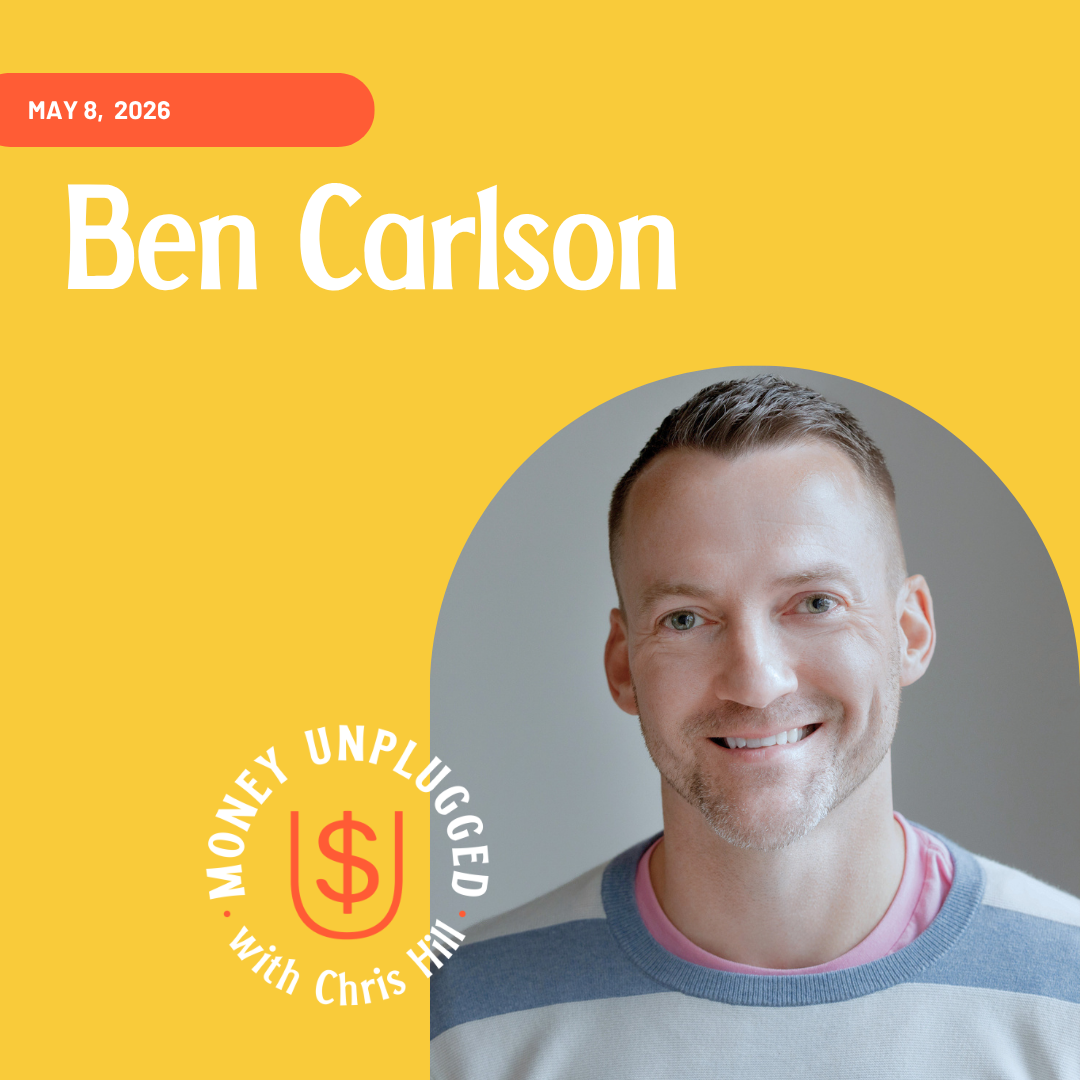
Episode 66: Why Less is More in Investing and Life
Ben Carlson has a simple philosophy when it comes to money — and life: less is more. He writes it in every book he signs. It sounds obvious, but most people never actually live it.
He’s the co-host of Animal Spirits and author of the brand-new book, Risk and Reward: How to Handle Market Volatility and Build Long-Term Wealth.
Chris Hill talks with Ben about:The lesson his late brother Jon taught him about risk and money
Growing up in Michigan with frugal parents and a dad whose only financial advice was "never carry a credit card balance"
What it was like to sit in the room during the 2008 financial crisis and watch the smartest people he'd ever met choose fear over opportunity
Why he gave his wife a PowerPoint presentation about investing before they got married — and how far she let him get
-
Episode 65: The Hardest Money Skill Nobody Talks About
Dan Caplinger has spent most of his career helping people understand money — first as a tax and estate planning attorney, then as a longtime writer at The Motley Fool.
But the financial lessons that shaped him most started long before any of that: skipping school lunch to save a few dollars, counting coin rolls with his mom, and learning the hard way that a $60 Pac-Man game isn't what a nine-year-old thinks it is. Chris Hill talks with Dan about:
What the billable-hours model of law firms taught him about misaligned incentives
How he and his wife structured their finances before getting married
One change he would make to the US tax code
The money lesson he wishes he'd learned at 19